
This shaping technique is our favorite at the moment – Great results!
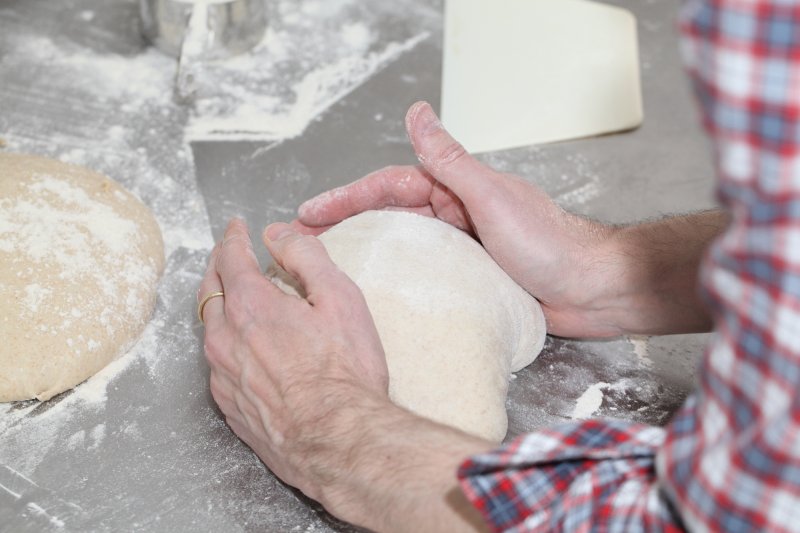
This little clip shows you how to shape your dough into a boule (round or ball shaped bread).
In the clip Ed uses the technique with a wholewheat sourdough / levain 68% hydration dough.
You can find the complete recipe of our favorite wholewheat sourdough bread here.
The aim of this technique is to create tension on the outer surface of your boule. This tension will help you to get a good oven spring and a nice ear on your bread, provided you score your bread correctly.
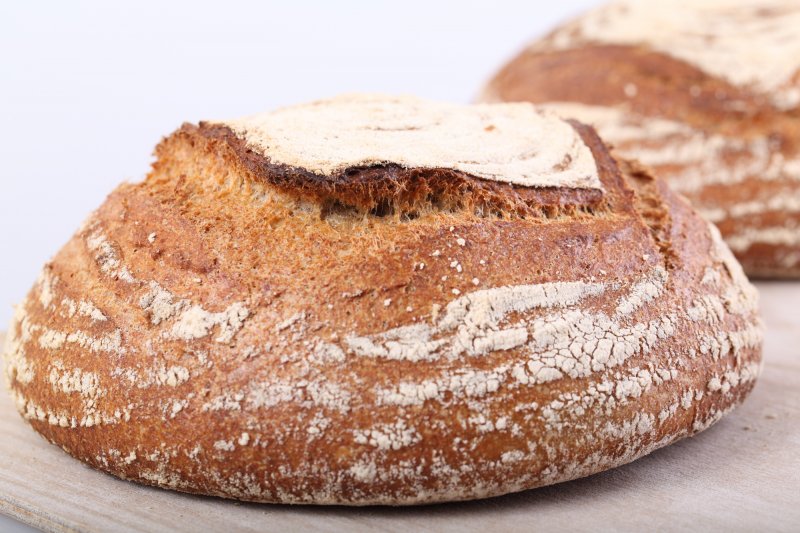
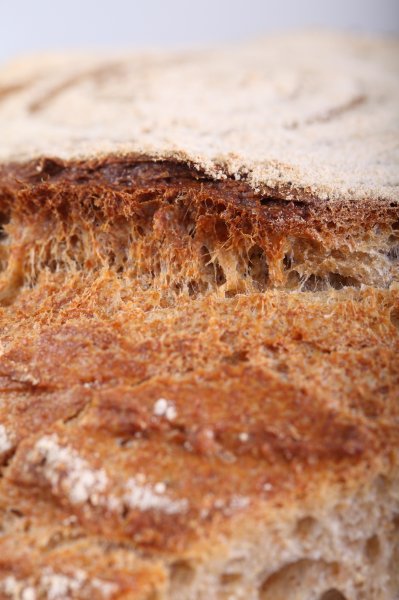
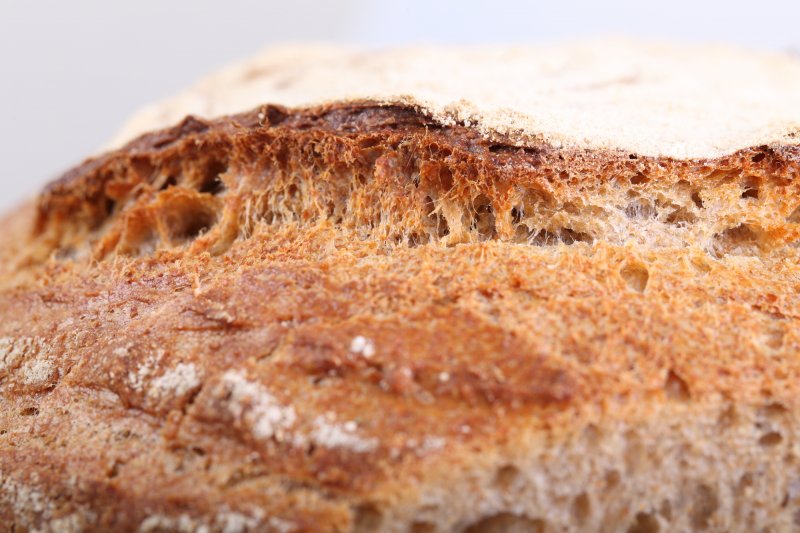
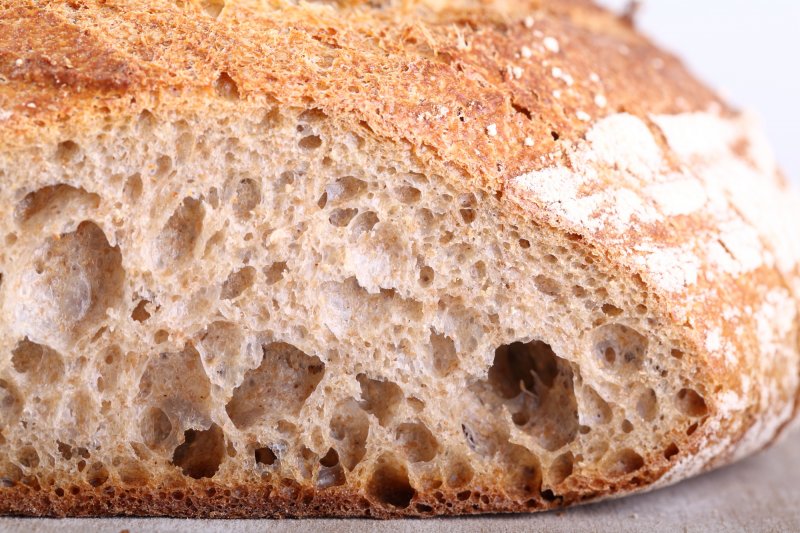
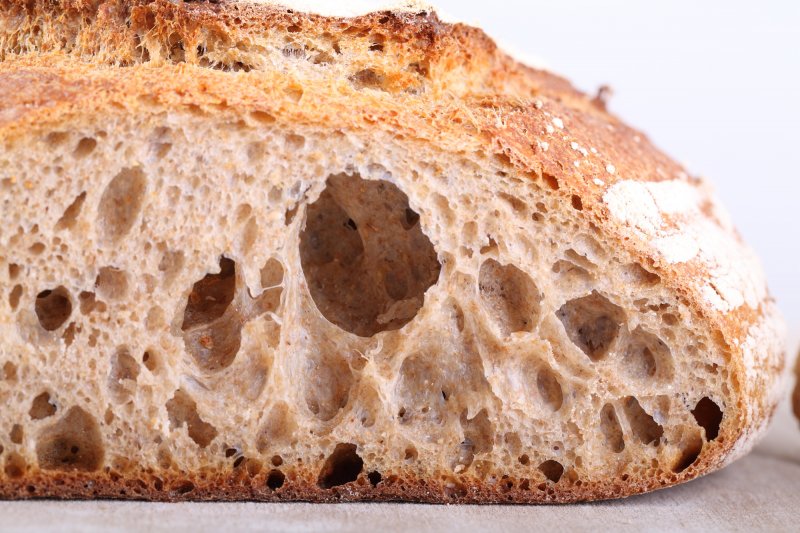
Shaping efforts rewarded with good looking boules
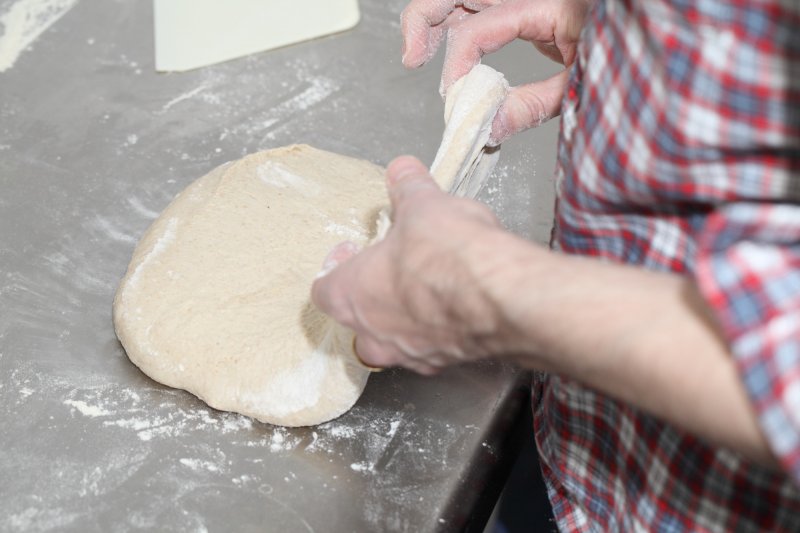
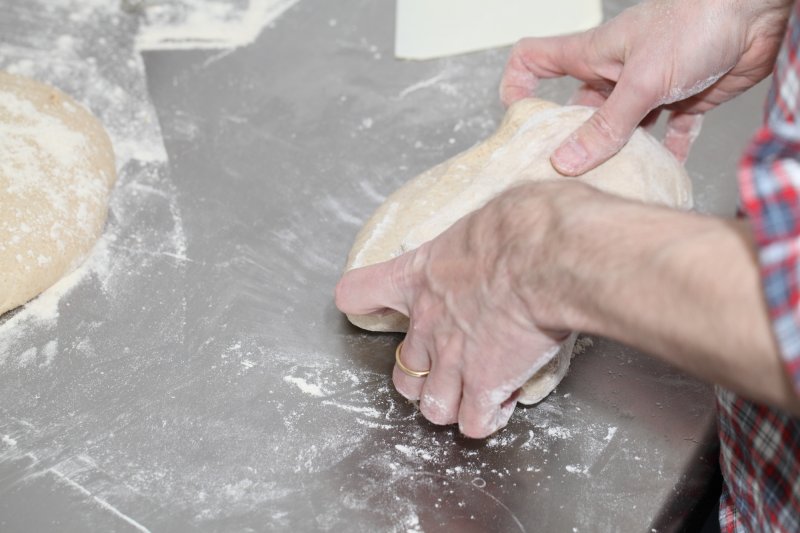
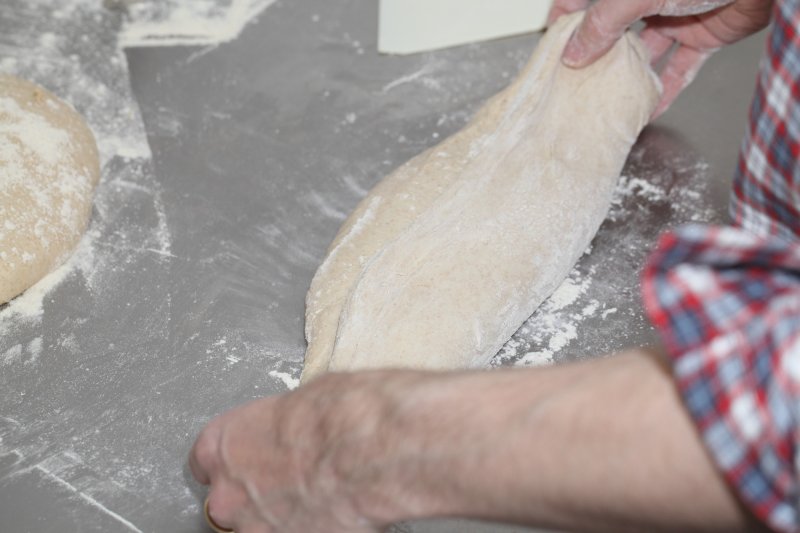
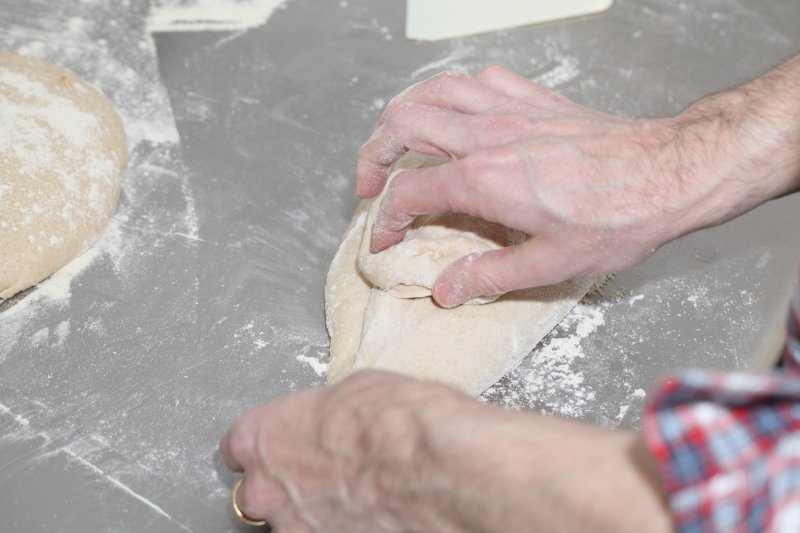
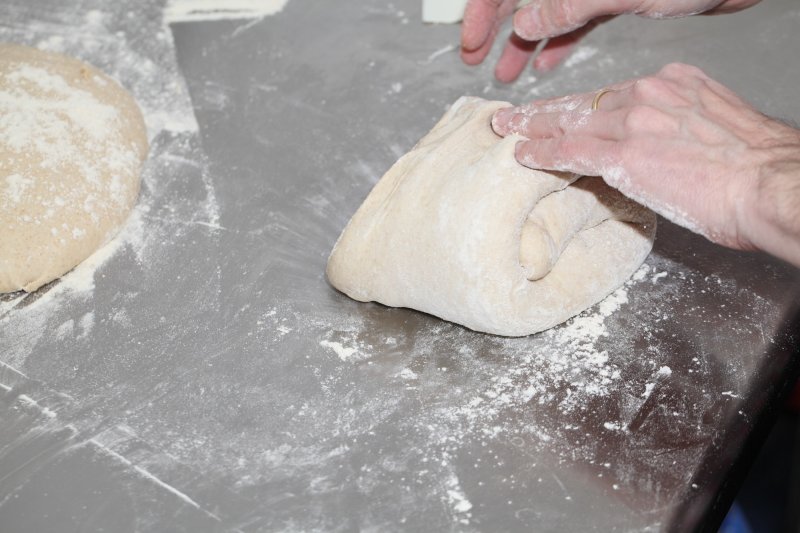
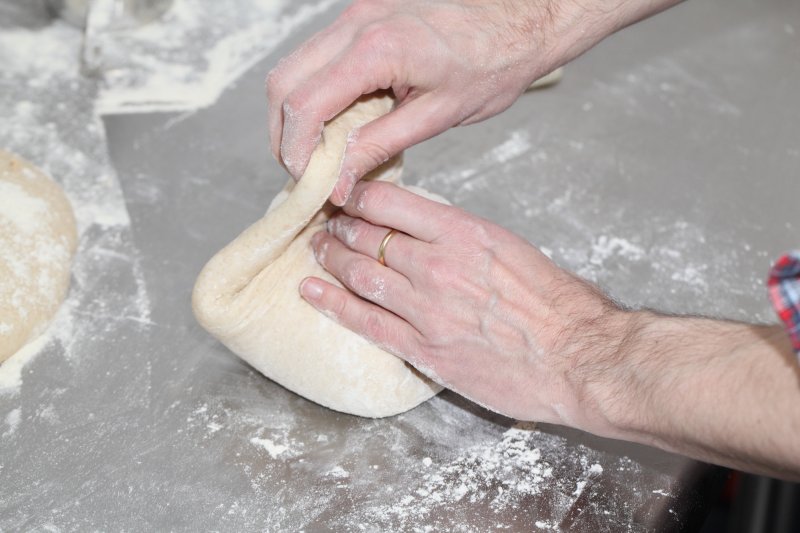
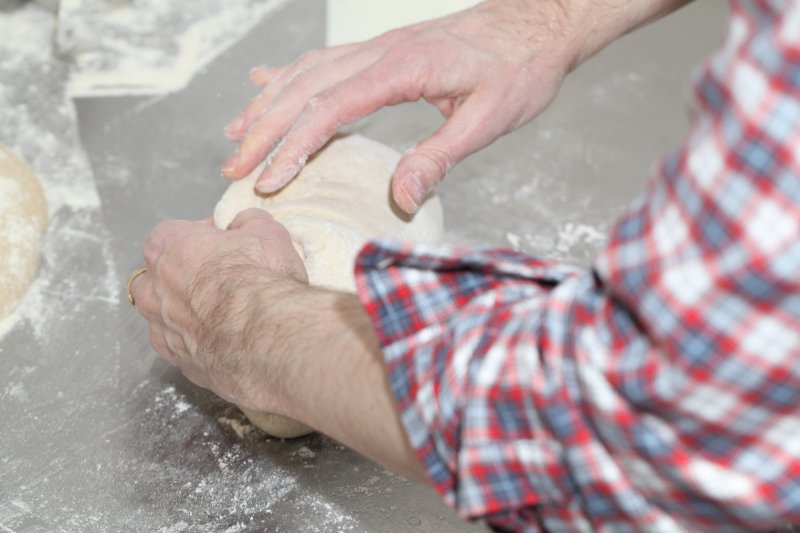
Shaping stages of a boule – the last ‘rolling the ball’ stage feels rather cool..
Bij mij blijven het geen bolletjes; ze lopen uit en worden een soort van plat brood. Nou ja dit is mijn eerste keer om bolletjes van zuurdesem te maken.
Hallo Maria,
Misschien is het een idee om onze zuurdesem mini boules te maken. Dan kun je vaker oefenen met het vormen. Om een goed desembrood te maken moeten heel veel aspecten goed worden ingevuld. Van de werking van het desem zelf, tot de hydratatie van het deeg, de ontwikkeling en het op spanning brengen, maar ook de bloem die je gebruikt.
Wij hebben een aantal tips voor zuurdesembakkers op een rijtje gezet:
www.weekendbakery.com/posts...m-bakkers/
Gewoon lekker blijven bakken en ervaring opdoen met je desem (en verversen) en aantekeningen maken van wat er wel en niet goed gaat.
Veel succes en plezier 🙂
Graag info over bakken van glutenvrij zuurdesembrood.
Ik zou het fijn vinden met reacties op het onderwerp.
Bedankt,JO
Beste JO,
Wij hebben zelf weinig tot geen ervaring met glutenvrij desembrood. Er zijn gespecialiseerde sites over glutenvrij bakken waar je meer informatie en recepten kunt vinden (met name Engelstalig).
www.letthemeatgfcake.com/glute...ugh-bread/
www.beyondceliac.org/glute...sourdough/
Veel succes ermee.
Thank you! Thank you!
Thank you very much for showing the techniques.
Kind regards
Huib Kers
As a new sourdough starter I learned so much from your website 😍. Thank you so much! Will recommend to anyone 😁👍
Everything about this site is FANTASTIC. Making the starter, recipies, shaping and so much more. My go to site when making sourdough bread. Thank you
Hello Elaine,
We very much enjoyed reading your comment. So glad we can be part of your baking joy this way.
Hope the upcoming weekend will be full of baking again. We sure are going to bake over here, after a long period of ‘too hot for the oven weather’, it will be great to get our hands on more dough again!
Happy baking
Supper effort super website
Super comment, thank you Solo 🙂
do you ever shape a longer more oval loaf to fit in a romertopf clay baker. wondering if you would fold and just stretch it out more. don’t know how I’d do the cupping though
Hello Pat,
In this short clip of baking our pain rustique you can hopefully see a bit of the shaping we do (did) to get an oval / batard shape. We do have other techniques, but not a good clip to show you more at the moment. Maybe also google ‘shaping a batard’ will help some more.
www.weekendbakery.com/posts...the-movie/
Hi guys, thanks for all these wonderful videos. I have one more question that may be addressed elsewhere. After placing in banneton as above, how do I transfer to a dutch oven? Do I turn it upside down? Gently “slide” it in? Any tips would be appreciated, or pointers to a video you’ve done! Thanks again.
Hi Jacobim,
Thank you so much for your kind comment. Yes, you turn the banneton upside down just above the Dutch oven and the dough will fall into the pan with the right side up. If the dough does not release immediately, gently rock the basket ‘to and fro’ and let the gravity do the work. You can somewhat see it in this video at 2.30 into the clip: www.weekendbakery.com/posts...the-movie/
But please be careful with your hands close to the hot Dutch oven of course!
When I shape I am so worried about popping the lovely air bubbles and ‘deflating’ the dough, so I find I don’t get enough tension and cannot shape it into a nice round boule. Should I be less delicate? Every time I pop a bubble it feels wrong!!
Thank you so much for your site. I have your rye starter and it is a champion!!! Just starting into sourdough and so far just sticking to this bread with fantastic results. Thank you!!
Hello Jessica,
Thank you very much. If you are talking about smaller bubbles that appear on the outside of the dough, it is no problem to deflate them or some of them. But tension does not mean pressing harder on the dough, it’s built up by the pulling motion and rolling the dough towards you (keeping your pinkies in touch with the work surface). It requires some practice, but you can feel it and see it as soon as you have got the hang of it and this way you will certainly not damage the dough structure.
I tried rolling my dough like you did, but instead of magically tightening up, it stayed more or less the same. Even watching the video again, I’m not sure what I’m doing wrong. 🙁
Hi Dan,
Do not give up! You just need a bit of practice, make sure you feel the dough rolling under your hands and keep your hands in contact with your workbench (your pinkies). You will immediately recognize the different feel and tightening when you ‘get it right’.
Good luck with it!
Really good. Thanks! What is the soundtrack?
Hi Dean
Thank you. It is Passenger feat. Boy & Bear with Shape of love.
Thanks! I was hoping someone had asked this!
Hi – I’m new to sourdough baking & finding it a bit tricky! I’m wondering what kind of bowl you are resting the dough in after the stretch & fold? It looks similar to a coil bowl we made out of clay one time as a history lesson. Thanks!
Hi Amber, these are proofing baskets / bannetons made from cane. They are used to support the dough during the final proof (in our webshop you’ll find many shapes and sizes).
If you find sourdough baking tricky, why not start simple with this sourdough pita recipe:
www.weekendbakery.com/posts...ough-pita/
After that we can recommend this one:
www.weekendbakery.com/posts...n-naturel/
Good luck and have fun on your baking journey!
LOVE your website and the video of boule shaping. More often than not I shape my loaves as boules and your shaping technique makes it so easy. Of course I have a question and this is it .. When my loaves are finished baking and I remove them to a rack for cooling, they are beautifully smooth on the surface; well rounded and exactly as I want them. Then as they cool …. often they begin to dimple/wrinkle on top, losing that beautifully rounded taut surface. How can I prevent that from happening?
Thank you!!
Will
Hi Will,
You need to make sure your bread is well cooked /baked so not too much excess moisture can travel to the surface after baking and soften your crust. So check your oven temperature (see tips here: www.weekendbakery.com/posts...your-oven/) and/or maybe try giving the loaf a few extra minutes baking time. Use steam but be sure to release that steam well before the end of the bake.
Good luck with it!
Ed & Marieke
awesome video, puts a smile on my face
Thank you Yury 🙂
What a great little video…thank you!!
Thank YOU Ben 🙂
Happy Baking!